
Special educational Needs and Disabilities
Park Hill Junior School is ambitious for all our pupils and we believe that there is no ceiling on what can be achieved by anyone, regardless of their circumstance or background. We are committed to providing a supportive and inclusive learning environment, giving every young person the opportunity to fulfil their potential now, and in the future.
The leaders at Park Hill Junior School are leaders for all pupils, enabling our teachers to be teachers of all pupils. Park Hill Junior School is committed to distributed leadership to secure the best possible provision and outcomes for pupils with special educational needs. We have the same ambition for all our pupils, and recognise the importance and impact of prioritising our responsibilities to pupils with special educational needs.
We work in partnership with pupils and their families in identifying and providing for special educational needs. Where appropriate, we also work in partnership with other agencies. We recognise the importance of communication being inclusive, accessible and culturally sensitive to achieve effective partnership working.
What does it mean to have a Special Educational Need?
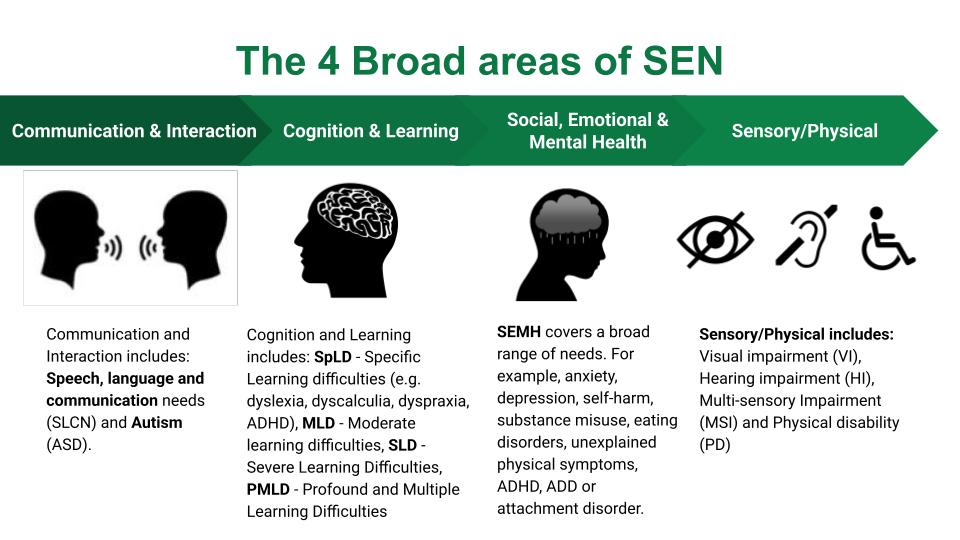
A pupil has SEN if they have a learning difficulty or disability that requires special educational provision to be made for them.
They have a learning difficulty or disability if they have:
-
A significantly greater difficulty in learning than most others of the same age; or
-
A disability that prevents or hinders them from making use of facilities of a kind generally provided for others of the same age in mainstream schools.
Special educational provision is educational or training provision that is additional to, or different from, that made generally for other children or young people of the same age by mainstream schools.
What this means at Park Hill Junior School
At Park Hill Junior School, we are committed to ensuring that all pupils have access to an inclusive mainstream offer alongside their peers, with a focus on maximising children’s access to the broadest possible curriculum offer. We firmly believe that teachers are responsible and accountable for the progress and development of all pupils in their class, including those with Special Educational Needs and Disabilities (SEND).
Our inclusive provision is built upon the expectation that all teachers will provide Quality First Teaching (QFT) which ensures that every child can access the curriculum and make progress in line with their peers. This is achieved through:
-
Adaptive teaching: Adjusting teaching methods to meet individual needs.
-
Multi-sensory learning: Engaging multiple senses to solidify understanding.
-
Personalised learning opportunities: Providing tailored activities and support.
The effectiveness of QFT, particularly the quality of adaptation, is closely monitored by the SENDCo and Senior Leadership Team (SLT) through regular classroom visits and book reviews.
As part of our generally available provision, all teaching staff receive professional development to build whole-class approaches that support pupils with a range of learning needs.
At Park Hill Junior School, we are committed to the inclusion of all pupils. We believe that every teacher is a teacher of SEND, and we pride ourselves on meeting a diverse range of pupil needs through our robust
Our SEND Team
At Park Hill Junior School, we don't just see the diagnosis or the demographic; we see the child. Our vision is to ensure that every pupil leaves us not just with the skills for secondary school, but with the unshakable belief that they belong.
At Park Hill Junior School, our vision is to cultivate an environment where every child, regardless of their starting point, is known, valued, and empowered to succeed. We believe that inclusion is not a separate initiative, but the heartbeat of our school culture.
 |
Mrs Griffin |
 |
Ms Penn |
 |
Mrs Iwin |
 |
Ms Colley |
Identification and assessment of children with SEND
At Park Hill Junior School, the identification of Special Educational Needs (SEND) is a proactive, multi-layered process that ensures barriers to learning are recognised and addressed early. The school operates under the principle that early identification is essential for a child’s long-term success.
Identification at transition and induction
Transition is treated as a high priority to ensure continuity of care.
-
Year 2 to Year 3 transition: The school maintains a close liaison with Park Hill Infant School and other schools. Information regarding existing SEND support plans, EHC Plans, and successful classroom strategies is shared between SENCos and class teachers before the child starts.
-
Mid-Year induction: For pupils joining from other settings, the school reviews previous school records and any information from external agencies. Every pupil is assessed on entry to establish a baseline of their current skills and attainment.
-
Early discussions: When a child joins with identified needs, the school holds early discussions with parents and the pupil to align expectations and agree on outcomes.
Use of data for identification
The school uses the Insight data system to monitor the progress of all pupils, which serves as a vital tool for flagging potential SEND.
-
Attainment and progress: Termly Pupil Progress Meetings are held between class teachers and the Senior Leadership Team (SLT). Data is scrutinised to identify pupils whose progress:
-
Is significantly slower than that of their peers from the same baseline.
-
Fails to match or better the child’s previous rate of progress.
-
Fails to close – or begins to wide – the attainment gap.
-
-
Attendance and behaviour: Patterns in attendance and behaviour are monitored as indicators of underlying needs (e.g., SEMH or sensory processing difficulties). A sudden change in behaviour often triggers a review of a pupil's well-being and potential learning barriers.
Screening and assessments
Beyond daily teacher observation, the school employs specific screening tools to pinpoint needs:
-
Whole-cohort screening: Standardised assessments in Reading, Writing, and Maths are used to provide 'standardised scores' that can highlight discrepancies between a child’s potential and their performance.
-
Specialist screening: If a child continues to struggle despite quality first teaching, the Inclusion Team may use diagnostic tools for:
-
Phonics/literacy: Checking for phonological awareness gaps.
-
Speech and language: Identifying communication barriers.
-
Emotional well-being: Using tools like the Zones of Regulation or Strengths and Difficulties Questionnaires (SDQs) to screen for SEMH needs.
-
How staff share additional concerns
The school fosters a culture where "every teacher is a teacher of SEND."
-
Professional dialogue: If a teacher observes a pupil struggling with a specific concept, sensory environment, or social interaction, they raise this initially with their Phase Leader.
-
Internal referral: Staff submit concerns to the SENDCo, Mrs Griffin. This leads to the 'Assess' phase of the Graduated Approach, where the Inclusion Team may observe the child in class to provide specific advice or adaptations.
How parents share additional concerns
Park Hill Junior School recognises that parents know their children best.
-
Open-door policy: Parents are encouraged to speak to the class teacher as the first point of contact, either at the end of the school day or via a scheduled meeting.
-
Formal consultation: Concerns can be raised during termly consultation evenings, where progress against targets is discussed.
Direct access to the Inclusion Team: Parents can request a meeting with the Inclusion Manager or SENDCo if they feel their child’s needs are not being met or if they have received an external diagnosis/report.
Pupil Passport
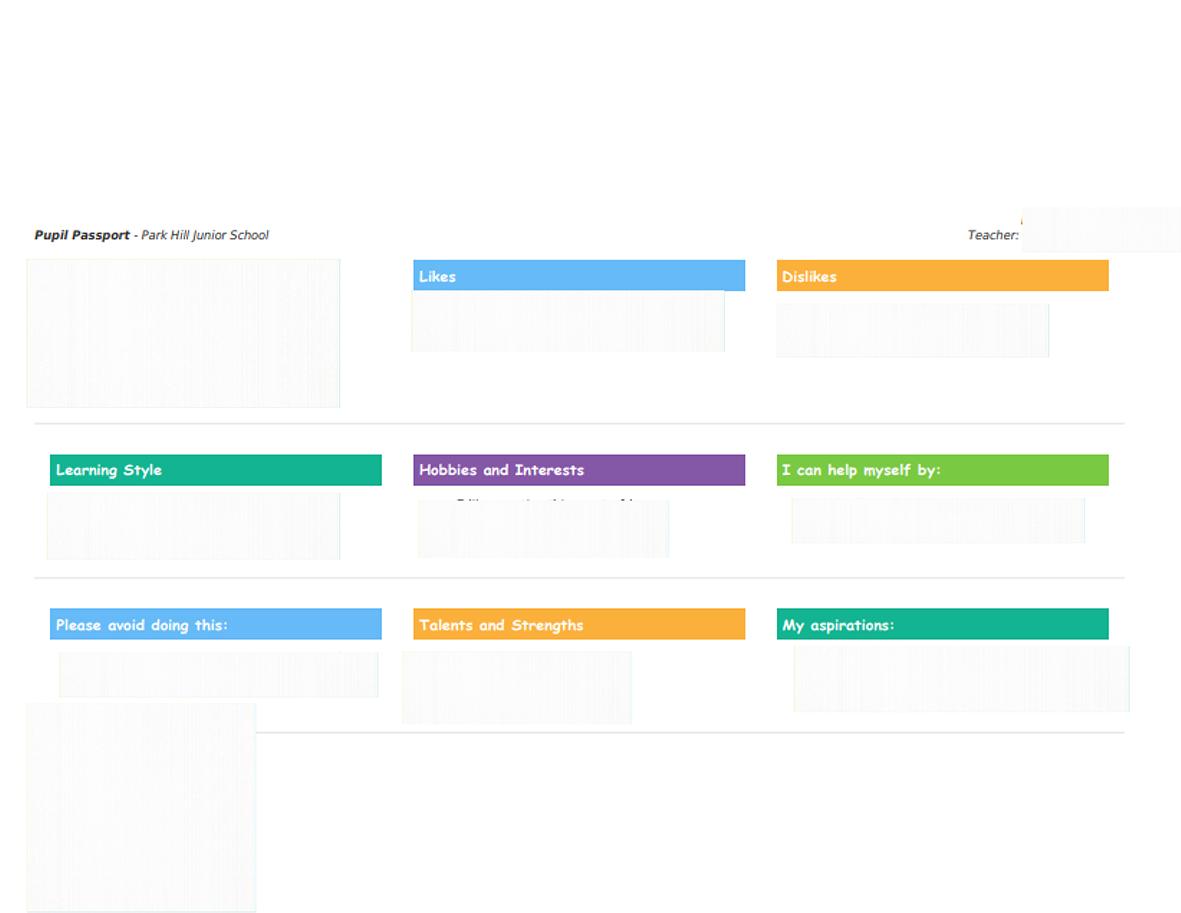
A pupil passport is a regularly reviewed document that contains the needs, strengths and individual strategies for every student with an EHCP or on SEN Support. These are developed in partnership with pupils and their parents/carers. Where appropriate, they might also include strategies recommended by other professionals.
Example:
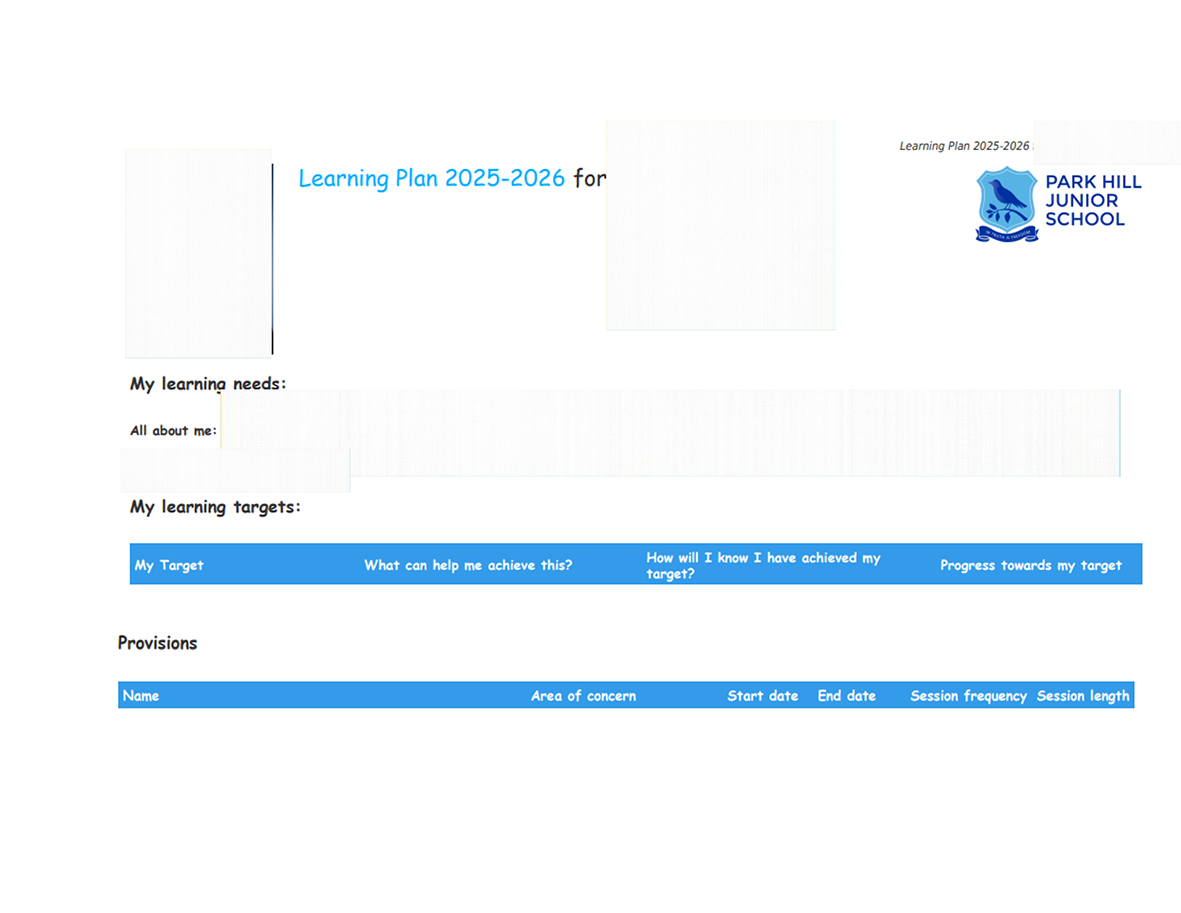
Learning Plan
Some pupils who require more specialised support will have Individualised learning plans to complement pupil passports. For example, an individualised learning plan will be used to:
-
Track progress against long-term outcomes in Educational, Health and Care Plans (EHCNAs) for pupils working below age related expectations
-
Inform medium-term and daily curriculum planning and provision where children are accessing adapted curriculum pathways
-
Inform intervention planning
Example:
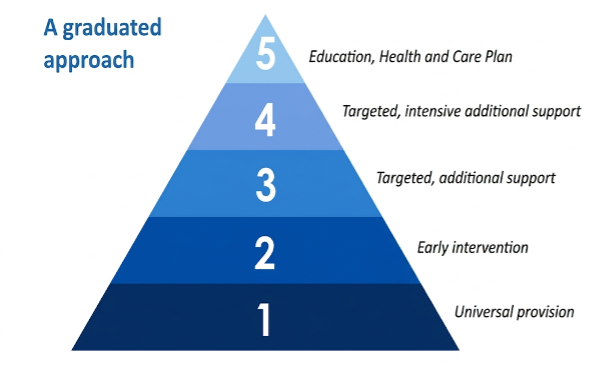
Universal provision – high quality teaching
Park Hill Junior School ensures that a universal provision of high quality teaching is able to address gaps in foundational knowledge and skills. Through evidence-informed classroom routines and a well-planned curriculum, teachers are able to address reading fluency and accuracy, communication and language skills, writing composition and number facts. Furthermore, our carefully selected and sequenced curricula ensure foundational subject specific knowledge is secure at every step. For some students, effective in-classroom targeted support ensures gaps are identified and tackled quickly through our responsive and adaptive classroom practice.
Targeted support
At Park Hill Junior School, we have the following interventions:
● Speech and Language
● Pre teaching
● Post-it note interventions
● Counselling
● ELSA
● Mentoring
● Phonics
● Precision teaching
● Maths booster, reading comprehension and grammar clubs
All interventions are recorded on provision maps and are then reviewed half-termly by the intervention or club lead.
Specialist support
At Park Hill Junior School, we work in partnership with a range of external agencies, and they will support the planning and delivery of specialist interventions. This might include mentoring, specialist speech and language therapy sessions focused on speech sounds or access to specialist mental health support.
Where appropriate, teachers are made aware of the focus of any intervention so that they can support pupils to generalise the skills learnt back to the classroom. Interventions are reviewed at least every half-term to check the impact against the intended outcome. If the intervention does not have the expected impact, changes will be made to the intervention.
Staff training
Our Inclusion Manager is an experienced teacher who has completed her NPQSENCO qualification. The school prioritises time for the SENCO to be able to work alongside other staff in the school to build expertise in the classroom, for example, through coaching, so that all teachers build their confidence and competence. There is also a team of Learning Support Assistants who receive regular training. Some staff also receive additional training in a particular specialism, such as teaching assistants who are trained as Emotional Literacy Support Assistants. We also have members of staff who are level 2 Team Teach trained with a particular focus on de-escalation.
SEND-specific training has been delivered on the following areas:
-
Supporting children with specific learning difficulties
-
Extreme Demand Avoidance (EDA) or demand sensitivity
-
Team teach
-
Provision map
We commission additional support from the Speech and Language Therapy team. In addition to caseload work, the Speech and Language Therapist works in partnership with the SENCO to develop and deliver training to build whole-class approaches that support pupils with speech, language and communication.
Useful links
● https://padlet.com/CroydonEPs/croydon-padlet-qbi4yfu4sx1dlemi
● https://www.croydon.gov.uk/children-young-people-and-families/family-hubs
Teacher Handbook: SEND
With contributions from specialists across the sector, the handbook is a comprehensive resource for teachers and parents to use over time. It brings together practical examples of high-quality teaching – placing focus on removing barriers to learning, getting to know and understand individual learners, and bringing to life the graduated approach. To access this free resource, click on the link below and sign up to Whole School SEND:
Whole School SEND Online CPD Units
Free, flexible online learning to help develop inclusive practice.
SEND Information Report for Park Hill Junior School
Croydon Local Offer website: